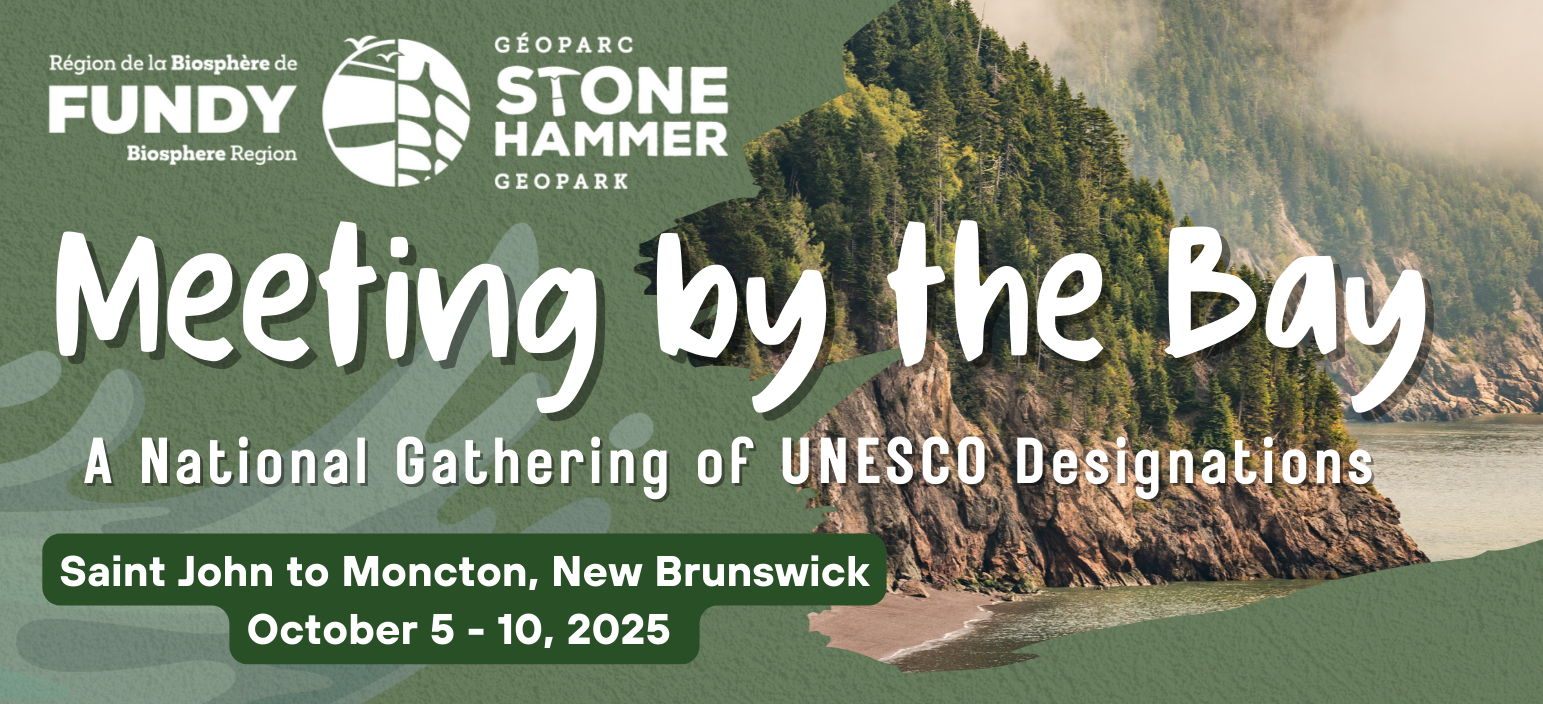
 The 2025 “Meeting by the Bay” National Gathering, held in Saint John and Moncton, brought together representatives from Canada’s UNESCO Biosphere Regions, Geoparks, and Atlantic World Heritage Sites. From October 5-10, Fundy Biosphere Region and Stonehammer Geopark hosted the week-long event focused on collaboration and field-based learning along the Fundy coast. Sessions paired sessions and group discussio ns with on-site visits that brought the region’s natural and cultural heritage into direct conversation with national priorities.
Throughout the gathering, attendees explored themes like heritage interpretation, community engagement, sustainable tourism, biodiversity conservation, and climate resilience. The program encouraged interdisciplinary exchange between scientists, Indigenous knowledge holders, park staff, tourism professionals and community leaders. Sessions highlighted practical approaches to stewardship and interpretation, and how governance frameworks can better support local priorities.
Saint John – Biospheres and Geoparks
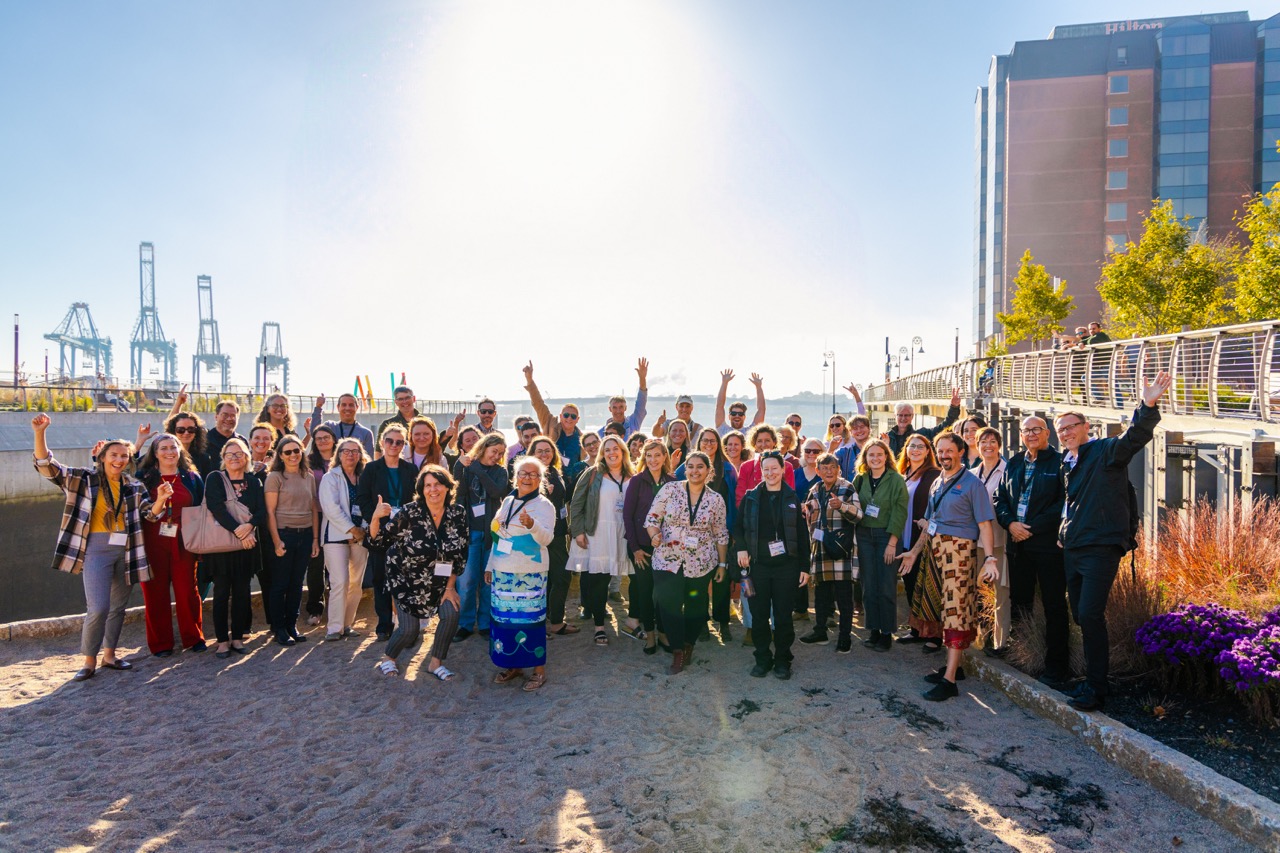
The week began with a reception on Sunday, October 5th, at the Saint John Arts Centre. Indigenous artworks, reflecting the port and the region’s waterways, provided a thoughtful setting for the week. The next morning, Elder Chris Brooks from Sitansisk offered an opening for the sessions held with biospheres and geoparks in Market Square, balancing humour with gravitas and emphasizing respect for people and place. Biosphere and geopark staff from across Canada then gathered to discuss long-term sustainability, biodiversity, local and international partnerships, leveraging research opportunities, pathways for future work, and capacity building.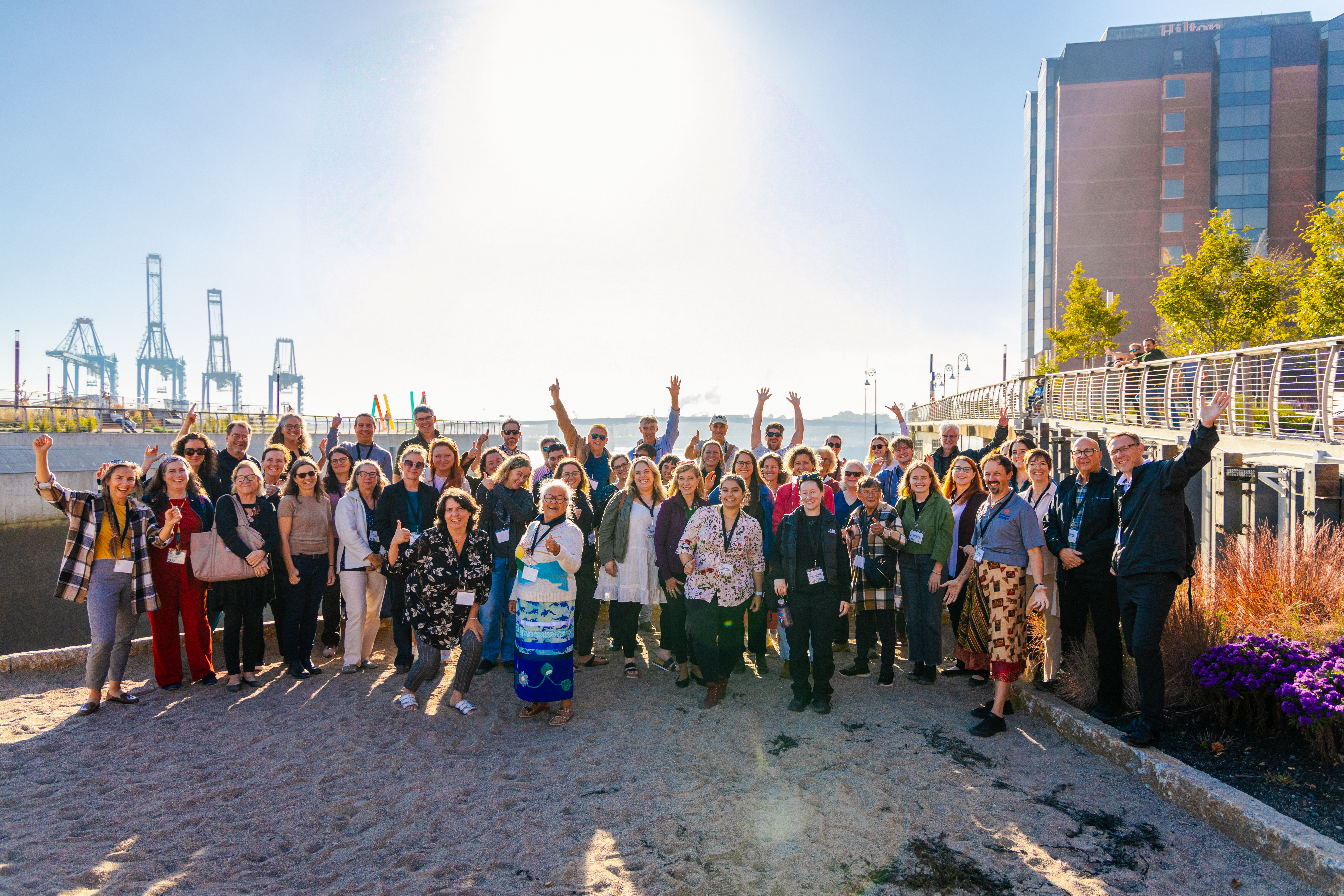
Field Day along Fundy Coast
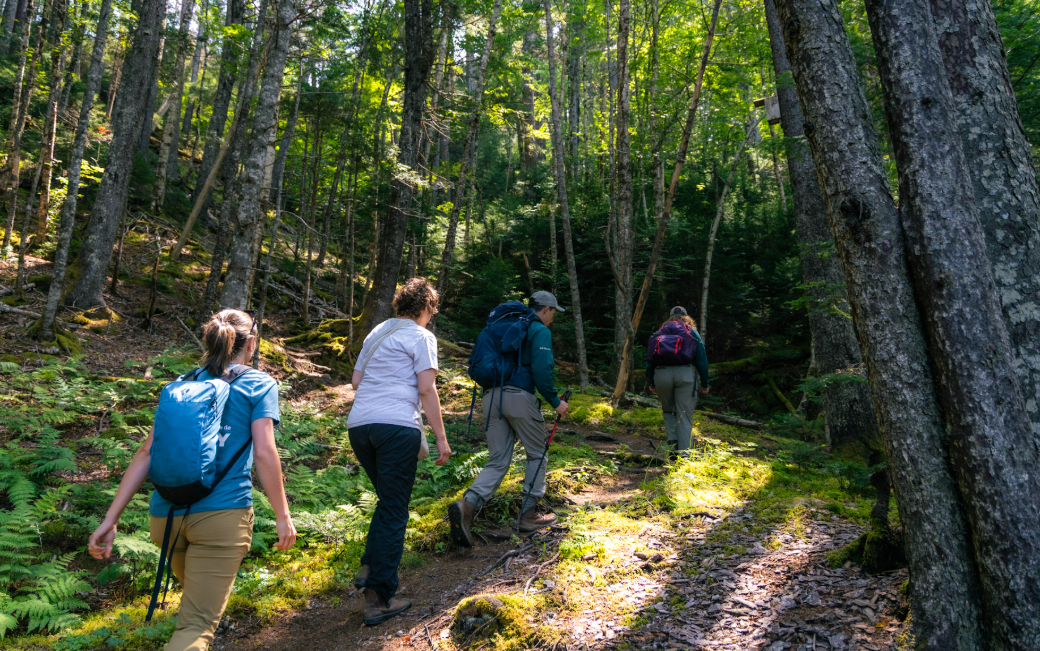
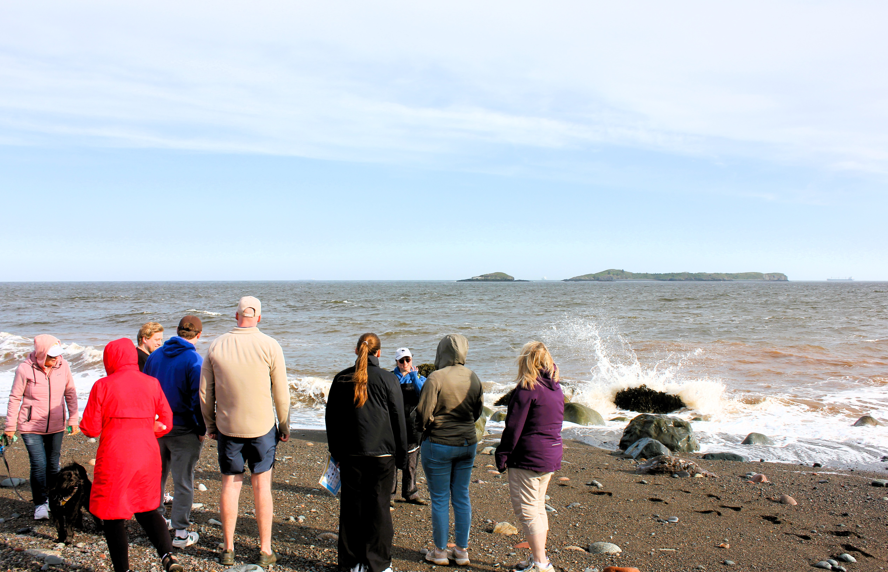
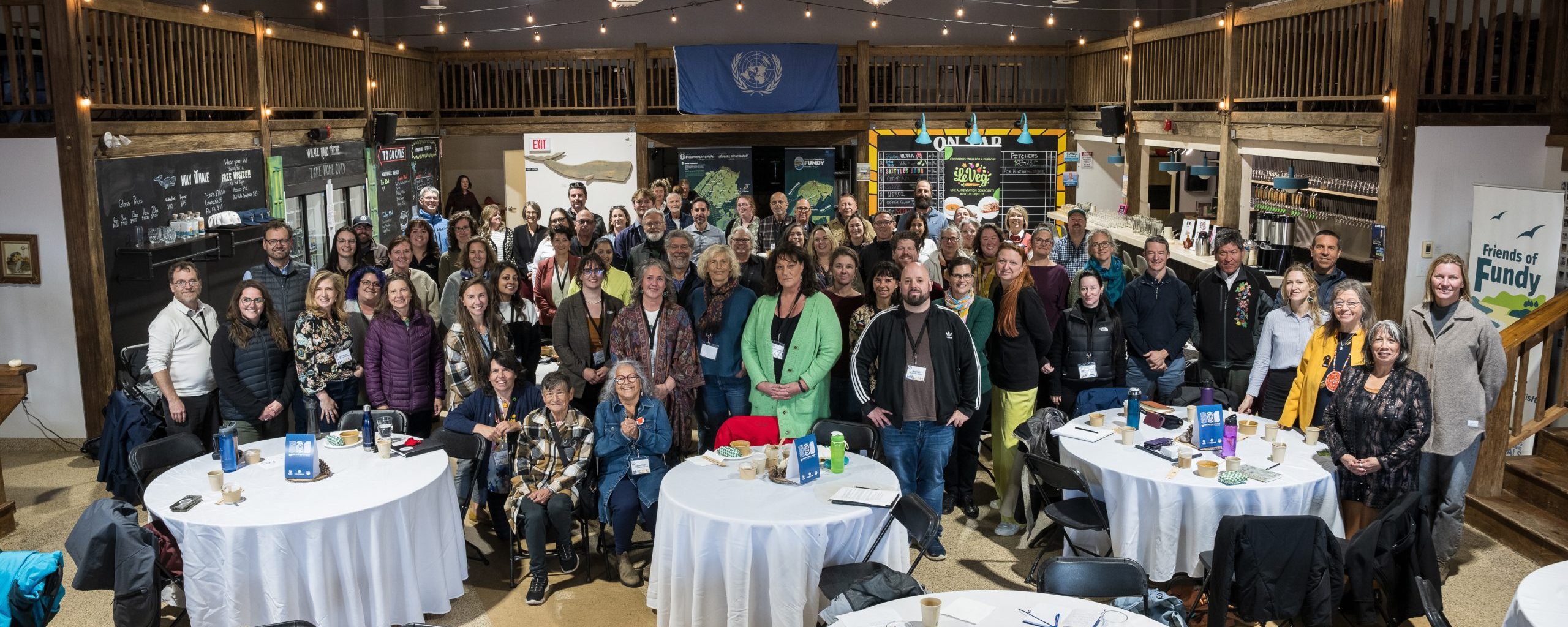
Mid-way through the week, the group travelled from Saint John to be joined by Atlantic UNESCO world heritage sites in Moncton, enjoying field visits along the Fundy coast that reinforced the week’s themes. Guided by Matt Stimson, Mike Carpenter, and staff from Fundy Trail and Fundy National parks, participants examined the geological history of the Fundy coastline and discussed how those deep time narratives can inform tourism interpretation and conservation practices. The delegation visited Fundy Trail Provincial Park, where staff provided context for regional recreation and conservation efforts. Despite the unfavourable weather conditions, the group remained engaged and prepared to learn. Lunch was served in a traditional “lumberjack” fashion, with meals presented in pails that reflected the region’s working history.
Site visits continued through Fundy National Park. Upon arrival at the Molly Kool building, staff at Wolfe Lake Visitor Centre elucidated the area’s natural and cultural landscape. The site is recognized for its achievement in having the first female ship captain, demonstrating its suitability for conversations about gendered labour histories and maritime heritage. Participants also discussed current conservation initiatives for Atlantic salmon in the Inner Bay of Fundy and the role that national park programmes play in regional recovery efforts. On Wednesday, World Heritage Sites and Atlantic Canadian Partners arrived in Moncton for an evening reception at St. James Gate.
Moncton – Biospheres, Geoparks, and Atlantic World Heritage Sites
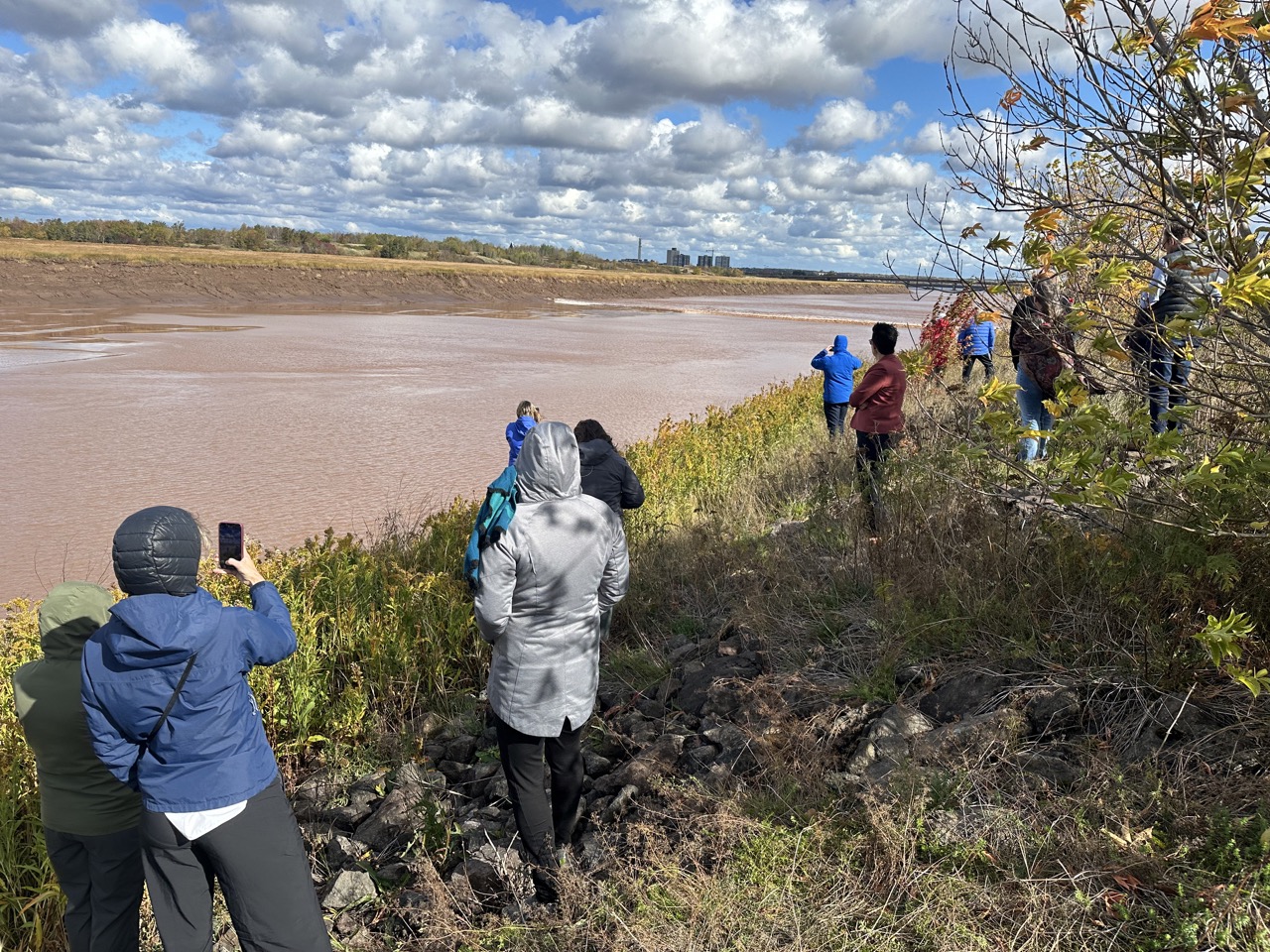
Thursday’s sessions were held at Riverview’s Chocolate River Station. Elder Donna Augustine of Elsipogtog led the opening ceremony by grounding the group through reflection, song, and responsibility. This was followed by a keynote address from UNESCO representative António Abreu, who reinforced the international significance of the work of UNESCO sites, specifically, how connections between local practice and global frameworks foster sustainable development through local leadership. The day featured a viewing of the tidal bore from the banks of the Petitcodiac, panel discussions, and presentations exploring reconciliation in action, UN’s sustainable development goals, and regenerative tourism. Later that evening, attendees visited Resurgo Place for the Exploring Chignecto exhibit, which featured a collection of Mi’kmaq baskets loaned by artisan Brian Francis of Elsipogtog.
Moncton – Atlantic UNESCO Sites and Partners
Only those from Atlantic Canada stayed for Friday to explore the progress and future of the network of 13 UNESCO designations. Representatives from each site and other partner organizations introduced themselves and their work around the circle, sharing challenges and potential collaborations across the region. In the afternoon, the discussion focused on the future of reconciliation, network building, and the exploration of each group’s organizational capacities. The week concluded with an intimate reflection by Elder Chris Brooks where the group joined hands to illustrate the power of community and partnership.
Takeaways from the Week
“Meeting by the Bay” closed with a strong sense of shared purpose and collaboration, translating insight into action. Participants left with renewed appreciation for the depth of knowledge and diversity within Canada’s networks of UNESCO designations and a hunger to continue the momentum with specific pathways to guide future work. The week demonstrated how meaningful environmental and cultural stewardship depends on dialogue grounded in place, mutual respect, and long-term commitment. These can only be achieved by ensuring that Indigenous and local community voices remain central to planning and implementation. By combining research, storytelling, and community engagement, the gathering reaffirmed that the future of these landscapes lie in the strength of the relationships that sustain them.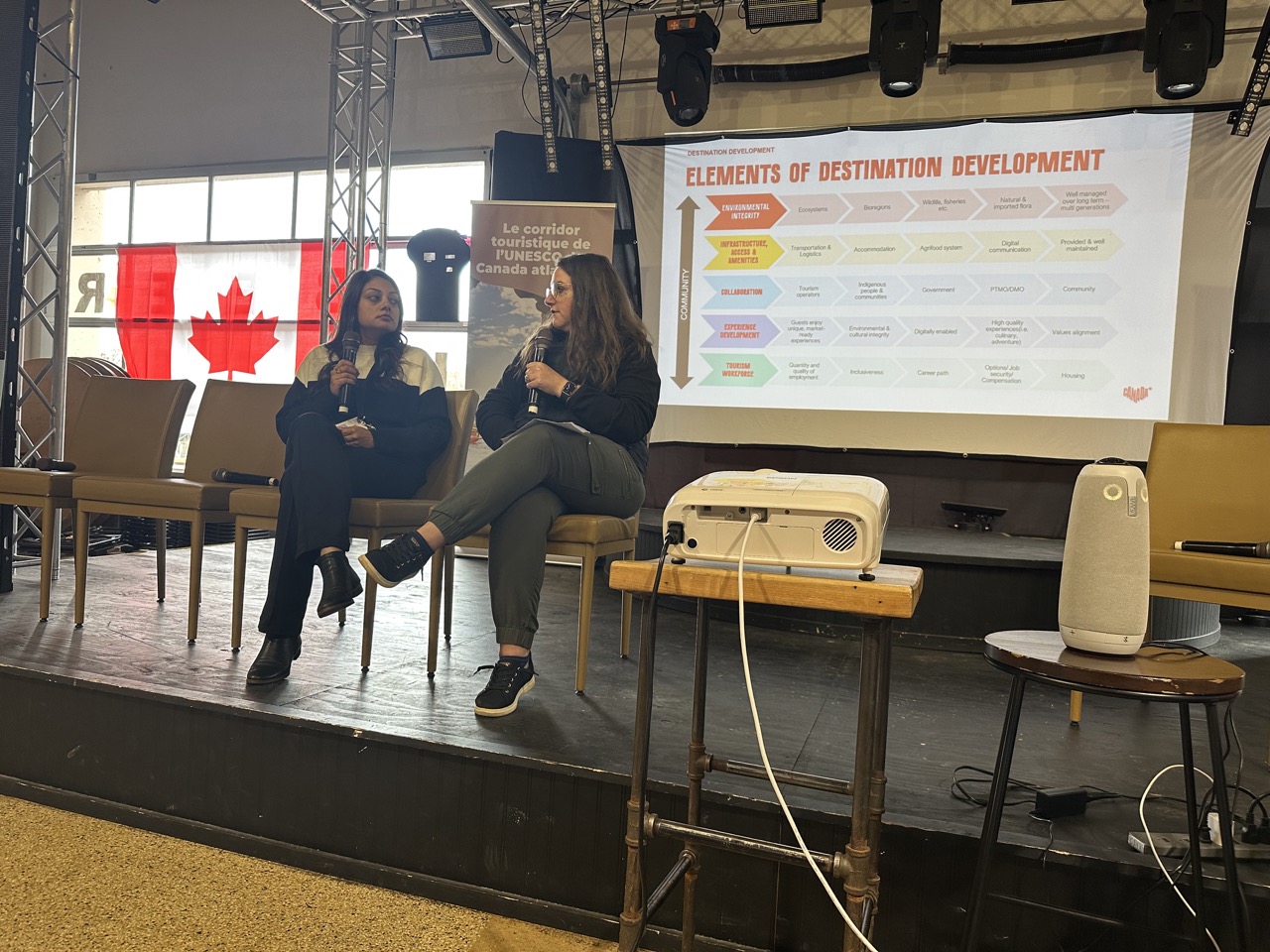
The event’s success was driven by our outstanding partners. We would like to thank CCUNESCO, CBRA, and CGN for their generous funding and logistical support. Equally, our appreciation extends to contributions made by panelists, Elders, presenters, and to our local partners like Friends of Fundy, Parks Canada staff, and nearby vendors.
Careful consideration was given to venue selection and experiences that support local communities and sustainable development. We were elated to host this historic gathering on the Fundy coast to bring networks together, uncover perspectives, and exchange knowledge. The event solidified the importance of unity and we are eagerly looking forward to the next national gathering.