By: Jenna Cowie, Charlotte Cullinan-Dickinson, and Naomi Meed
Every spring and summer, the soft, vertical banks of rivers and shores become bustling colonies of one of Canada’s most remarkable aerial insectivores*: the bank swallow (Riparia riparia). Small, graceful, and industrious, they nest in burrows dug into exposed soil or sand, feeding on flying insects, and performing spectacular flights. Yet over recent decades, their numbers have fallen drastically. This year, our monitoring work across Stonehammer Geopark and Fundy Biosphere Region added to the urgent story of their decline—and to the hope that we might still turn the tide.
Why the Bank Swallow Matters—and Why It’s Declining
If you’ve ever stood by a riverbank on a warm summer evening, you may have seen small, brown and white bank swallows darting through the air, scooping up insects in acrobatic loops and calling to each other with sharp, gutteral chirps. They’re tiny, quick, and often overlooked, but their presence is a sign of a healthy landscape. These birds connect us to something bigger: the flow of rivers, the life of wetlands, and the invisible web of insects that sustains so many species, including us.
Across New Brunswick and much of Canada, the skies are much quieter than they once were. People who grew up watching flocks of swallows over fields and water now notice only a few. This change hasn’t happened overnight. The change has been a steady, decades-long decline. Scientists have found that bank swallows have disappeared from many of the places they once thrived, and where colonies do remain, they are often smaller and more fragile.
The reasons are complex, but they all point back to how landscapes are changing.
 The steep, sandy banks that swallows rely on for nesting are often altered. They are stabilized to prevent erosion, built over, or disturbed at the wrong time of year. The swarms of flying insects that once fuelled these birds are fewer now, a result of pesticides, habitat loss, and shifts in climate. During their long migrations to South America and back, bank swallows face challenges we are only beginning to understand, from shrinking wetlands to unpredictable weather.
What’s striking is how these challenges link together. A single swallow’s life spans continents: nesting in riversides, feeding in meadows, and roosting in marshes. When we alter even one part of that chain, it ripples across their whole existence. Their story is a reminder that conservation doesn’t stop at a county line or even a national border. Conservation involves the connectedness of ecosystems, and our responsibility to steward them and keep them whole.
What We Did This Year: Monitoring in New Brunswick
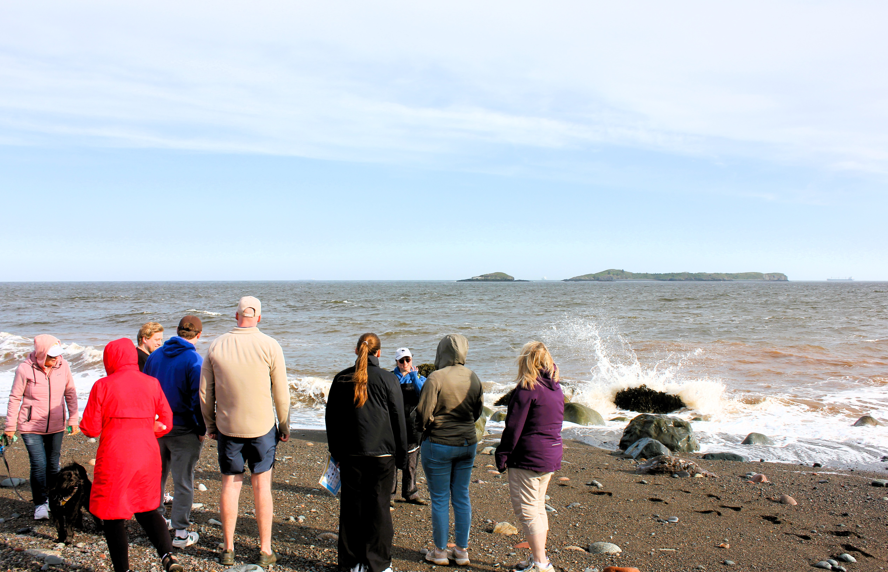
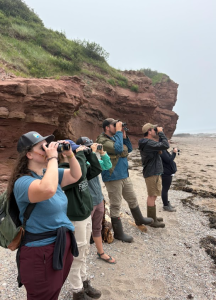
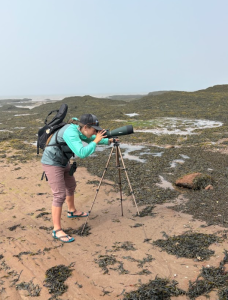
This summer marked the very first year of our bank swallow monitoring program, and with it came a sense of exploration and discovery. Our focus stretched across Stonehammer UNESCO Global Geopark and Fundy Biosphere Region, landscapes where geology, ecology, and culture all intertwine. Many of the sites we visited were coastal cliffs along the Bay of Fundy, where the cliff faces of sedimentary rock and loosely packed sand rise above the world’s highest tides.
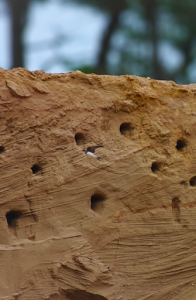 Armed with binoculars and notebooks, we set out to learn how bank swallows are using these dramatic shorelines. At each site, we stood back and watched, waiting to see tiny silhouettes arcing against the sky, wings flickering, before disappearing into a burrow in the cliff face. We noted the number of burrows, the activity of birds carrying food, and the condition of the nesting banks themselves.
This work is the foundation of a long-term effort. By recording where colonies are found today and how they are faring, we are building a baseline against which we can track changes over time, understand pressures on the species, and guide conservation efforts in years to come.
What We Found
Because this is our first season, the story we can tell is one of beginnings. We found bank swallows making their homes in some of the most striking landscapes of the Bay of Fundy, where sheer cliffs meet rushing tides. At several of these coastal sites, the colonies brought the rock faces to life: burrows dotting the surface, birds weaving in and out in constant motion, their calls carried on the wind. It was a powerful reminder of how even the most rugged environments can shelter delicate lives.
Not every site held swallows, and some of the cliffs that looked suitable were empty. That, too, is valuable information. It helps us see where the birds are choosing to settle and raises questions about what factors—such as erosion, vegetation growth, availability of food/resources, human disturbance, or simply chance—make the difference between a thriving colony and bare stone.
One of the most exciting moments of the season came when we documented over 12 mating pairs between two of our sites, and observed at least 7 young swallows. Seeing those fledglings poke out of the burrows for the first time was a hopeful sign. It reminded us that, even in the face of widespread decline, new generations are still taking wing here on the Fundy coast.
Together, these first observations give us a map of where bank swallows are present in the region today. In the future, returning to these same sites will tell us whether colonies are holding steady, growing, or shrinking. For now, we take inspiration in the simple fact of their presence: that even as their numbers decline across the country, these swallows are still here, carving their nests into our cliffs, riding the winds above our tides, and stitching themselves into the living fabric of the Fundy coast.
Why Our Monitoring Matters
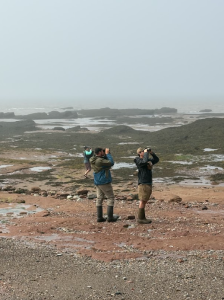 This year’s fieldwork went beyond our team visiting cliffs and counting burrows because it involved joining a larger movement. Across New Brunswick, more than a dozen organizations, community groups, and volunteers are contributing their time and expertise to track the status of the bank swallow. Together, these efforts weave a network of local knowledge that, when combined, creates something much bigger than any one group could accomplish alone.
Our role is to add the voice of Fundy Biosphere Region and Stonehammer Geopark to that collective story. By documenting colonies along the Bay of Fundy’s dramatic coast, we’re helping to ensure that this part of the province is represented in the larger dataset. The information we gather doesn’t stay in our notebooks—it flows into Birds Canada’s extensive monitoring program, where data from across the country is analyzed and used to understand population trends, identify priority habitats, and inform conservation strategies at provincial and national scales.
In this way, our work is both local and global. Each swallow we see entering a burrow in a Fundy cliff is also part of a much wider story, spanning provinces, countries, and continents. By contributing our observations, we help strengthen that shared picture, giving decision-makers and communities the knowledge they need to act on behalf of a species that connects us all.
Looking Forward: What Needs to Be Done
Our first year of monitoring gave us direction as well as baseline data. Standing beneath the cliffs and watching the swallows reminded us how much depends on thoughtful stewardship. Protecting nesting sites means recognizing the value of natural erosion, rather than always rushing to stabilize banks. It means giving colonies the space and quiet they need during the breeding season, even on busy coastlines where people come to walk, fish, or explore.
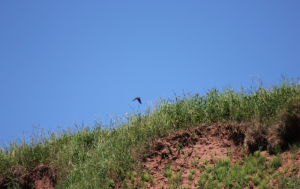
It also means looking beyond the cliffs themselves. Bank swallows depend on the health of entire landscapes, from wetlands and rivers that support insect life, to migration corridors that span continents. The choices we make about pesticides, water quality, and land use ripple outward to touch these birds in profound ways. Instead of prioritizing coastline hardening along the Bay to protect against erosion, this information could lead some to reconsider their approach to future land management that could in turn maintain more cliff-side habitat for bank swallows along the Fundy coast.
As we look to the future, the path is clear: keep watching, keep listening, and keep learning. Each season of monitoring will add new pieces to the story, showing us where the birds are resilient and where they need our help. With that knowledge, we can work together, including scientists, landowners, communities, and conservation partners, to make sure these small bank swallows remain part of the Fundy coast.
Thank You
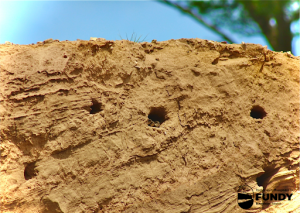
This work would not have been possible without support and collaboration. We are deeply grateful to the New Brunswick Wildlife Trust Fund, whose generosity made this first season of monitoring a reality. Their commitment to conservation gives species like the bank swallow a fighting chance.
We also want to thank Birds Canada for providing the monitoring protocols that guided our work in the field. Having a consistent, science-based approach ensures that our data can contribute to larger efforts across the province and beyond, connecting our local observations to a national picture.
Together, with the support of our sponsors and partners, we are laying the groundwork for a future where bank swallows remain part of our skies, our coastlines, and our shared natural heritage.
*Aerial insectivores are birds that catch and eat insects while flying. This group includes swallows, swifts, flycatchers, and nightjars—all species that rely heavily on healthy insect populations for survival.