Listening for a Rare Songbird: Monitoring Bicknell’s Thrush in the Fundy Region
By: Fundy Biosphere Region
In May 2026, the Fundy Biosphere Region (FBR) launched Fundy Thrush Watch, a Bicknell’s Thrush Monitoring Project with support from Fundy National Park and Birds Canada. This initiative aims to improve our understanding of one of Canada’s rarest migratory songbirds while supporting long-term conservation efforts in the Fundy coastal region.
Fundy National Park, Fundy Trail provincial park and the surrounding protected areas contain diverse forests and unique ecosystems that provide valuable habitat for many species, including several at risk. Through this partnership, FBR’s Conservation Project Manager and forestry staff are helping determine whether Bicknell’s Thrush still occupies suitable habitat in the Fundy region.
What is a Bicknell’s Thrush?
The Bicknell’s Thrush (Catharus bicknelli) is one of the rarest and most range-restricted migratory songbirds in North America. Listed as Threatened under Canada’s Species at Risk Act, this elusive bird spends much of its life hidden within dense, higher elevation conifer forests, making it difficult to observe. 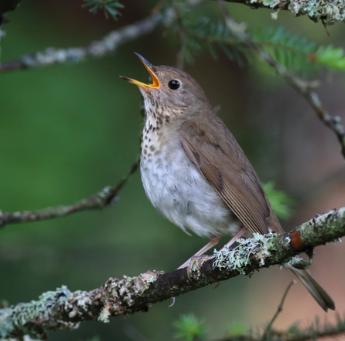
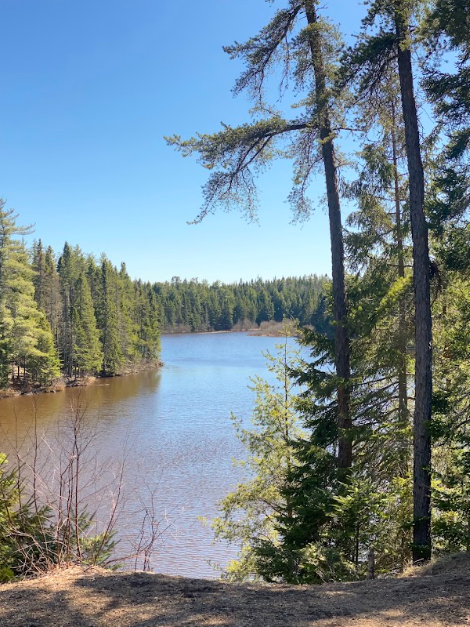
In New Brunswick, the species is primarily associated with the high-elevation Christmas Mountain range, where dense regenerating boreal forests provide ideal breeding habitat. Historically, however, Bicknell’s Thrush have been found in the Fundy region. The cold sweeping winds from the Bay of Fundy, the sheer coastal cliffs, steep river valleys and patches of dense regeneration post insect outbreaks have created conditions that mimic their preferred habitat. These conditions suggest that suitable habitat still exists, but little recent information is available to confirm whether the species remains.
Before each fall, Bicknell’s Thrushes begin an incredible southward journey, travelling along the Atlantic coast of the United States before making an overwater flight to the Caribbean. They spend the winter primarily in the mountain forests of the Dominican Republic, with smaller populations found in Haiti, Cuba, Jamaica, and Puerto Rico. In spring, they make the journey north again to their breeding grounds. For a bird that weighs only about 30 grams, its annual journey connects the forests of the Fundy region with ecosystems thousands of kilometres away.
Why Survey the Fundy Region?
The project focuses on Survival Habitat adjacent to Fundy Trail Provincial Park and the Little Salmon River Protected Natural Area (LSRPNA). In 2023 a provincial species at risk action plan was developed (LINK) that identified suitable habitat paired with areas of former detections that could be critical for the species survival.
Large-scale Spruce Beetle outbreaks have transformed portions of these forests, creating dense regenerating spruce stands that closely match the species’ preferred nesting habitat. Combined with the cool coastal environment, these forests offer conditions that may support breeding Bicknell’s Thrush populations.
The goal of the project is to determine whether this threatened species occupies these historic survival habitats. Confirming either the presence or absence of Bicknell’s Thrush will improve our understanding of its distribution in New Brunswick and help guide future provincial recovery efforts.
Monitoring Through Sound
Because Bicknell’s Thrush is so secretive, researchers rely on Autonomous Recording Units (ARUs) instead of traditional bird surveys.
ARUs are weather-resistant recording devices that are attached to trees and programmed to automatically record bird vocalizations over extended periods. Rather than requiring researchers to remain in the forest for hours each day, these devices continuously capture audio that can later be analyzed for the distinctive songs and calls of Bicknell’s Thrush. This project wouldn’t have been possible without the support and sharing of ARUs from the partners involved.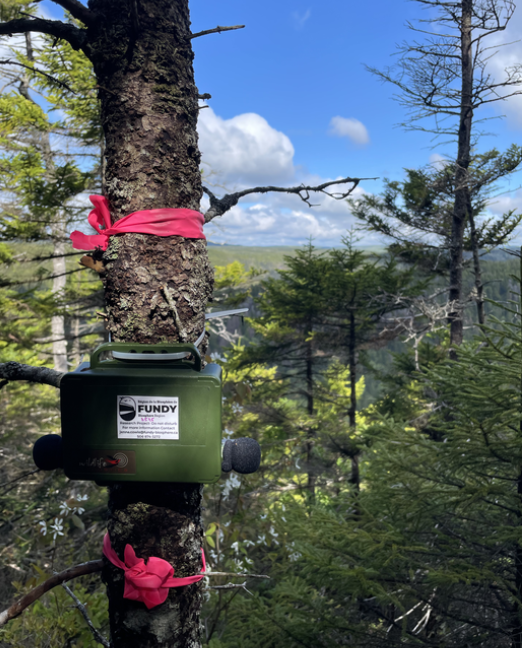
For this project, Fundy Biosphere Region deployed16 ARUs throughout the identified Survival habitat in the Little Salmon River Protected Natural Area on May 26 and 27, 2026. The units remained in the field until July, when staff returned to retrieve them.
Each recording unit was installed within dense regenerating spruce and fir forests that best matched the habitat preferences of Bicknell’s Thrush.
To maximize the likelihood of detecting the species, each ARU was programmed to record during peak bird activity:
- Two hours before sunrise until two hours after sunrise (four uninterrupted hours each morning)
- One and a half hours before sunset until one and a half hours after sunset (three uninterrupted hours each evening)
Recording during these periods captures the dawn and dusk chorus, when Bicknell’s Thrush and many other forest birds are most vocal.
What Happens Next?
Retrieving the recording units is only the beginning of the scientific process. Together, the ARUs collected hundreds of hours of audio that must now be carefully analyzed for Bicknell’s Thrush vocalizations.
Specialized software helps identify potential detections, while experts verify recordings to ensure accurate identification. Whether Bicknell’s Thrush is detected or not, the information gathered is valuable. Understanding where the species occurs—or where it is absent—helps researchers better understand habitat use, identify priority conservation areas, and guide future monitoring.
Supporting Conservation Through Science
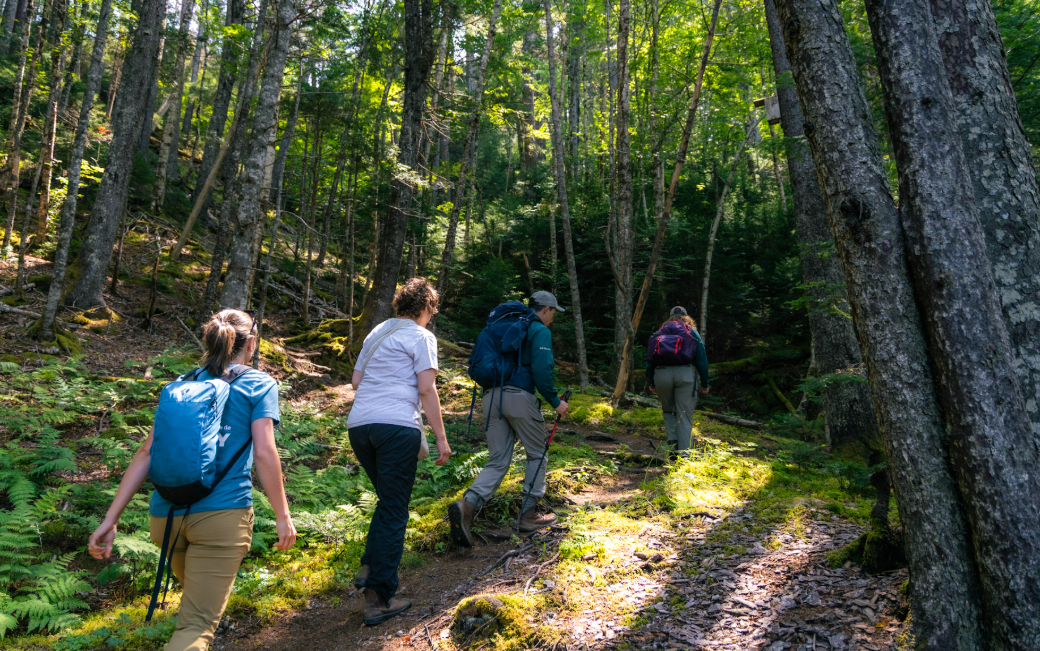
Photo Credit: Alex Mayberry
This project aligns with provincial priorities to strengthen ecological knowledge and support evidence-based stewardship of New Brunswick’s parks and protected natural areas.
The monitoring project will:
- Enhance baseline knowledge of biodiversity and habitat use of the identified survival habitat within the Little Salmon River PNA, adjacent to Fundy Trail Provincial Park.
- Expand survey coverage to additional high-priority sampling locations.
- Advance regional conservation priorities, collaboration and environmental stewardship.
- Provide reliable data to support future management, planning, and habitat conservation decisions.
By exploring this area and identifying usage patterns that can contribute to provincial databases the project helps ensure future conservation actions are based on reliable evidence.
Working Together for Species Recovery
Protecting species at risk requires collaboration. By aligning efforts with Fundy National Park, Fundy Trail Provincial Park and Birds Canada, Fundy Biosphere Region is combining local expertise with national conservation efforts to better understand one of Canada’s most elusive songbirds.

Photo Credits: Alex Mayberry
An important special thank you to Birds Canada, Fundy Trail Provincial Park and Environmental and Climate Change Canada for providing the equipment and support to make this project possible.
Projects like this not only support the recovery of Bicknell’s Thrush but also improve our understanding of the forests and ecosystems that sustain countless other wildlife species throughout the Fundy region.
Every recording collected helps build a clearer picture of biodiversity across the landscape. Whether the project confirms the return of Bicknell’s Thrush or identifies areas for future monitoring, the results will contribute to long-term conservation planning and habitat stewardship.
As the forests of the Fundy region continue to change, monitoring programs like this ensure that conservation decisions are guided by sound science. By listening closely to the forest, researchers are helping protect one of Canada’s rarest songbirds and the unique habitats it depends on for generations to come.
Stay Tuned for Something Exciting
Do you want to learn more about this project? Would you like to see the perspective of the meticulous field work that went into this project? Have you ever wanted to see the Fundy coastline from a birdseye view? Then stay tuned for a special video release that will be happening early this fall.
We partnered with a regional content creator to bring breathtaking videography of some of the most remote areas of the Fundy region together with science and an up-close and personal look on species at risk monitoring in New Brunswick. We can assure you this short film will leave you feeling inspired and with a renewed understanding of why protecting species at risk and the habitats they depend on is so important.