Before the Park Wakes: Discovering the Birds of Mill Creek Nature Park
By: Fundy Biosphere Region
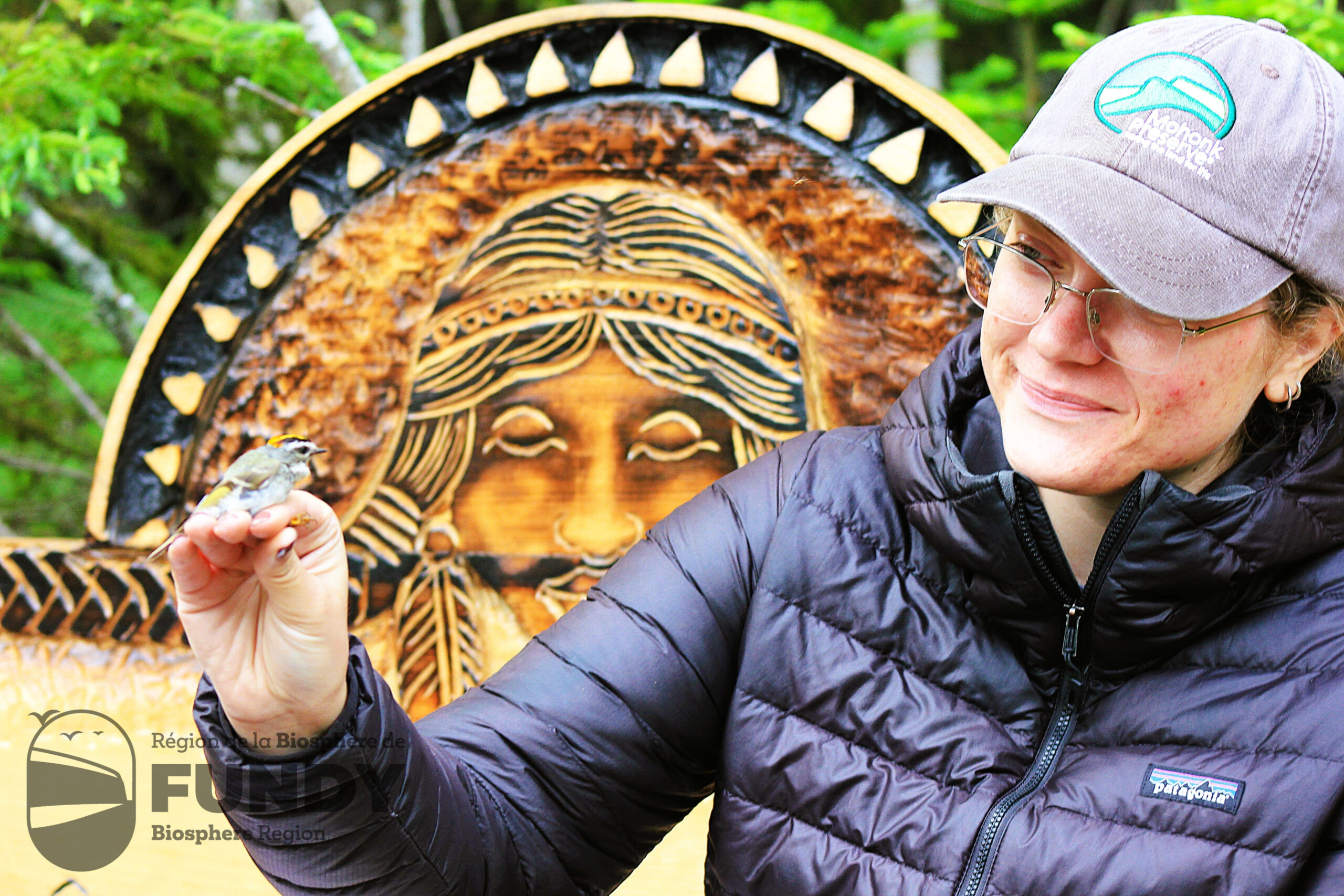
There are few things worth getting up at 3:00 a.m. for, but surveying forest-breeding birds will always be one of them.
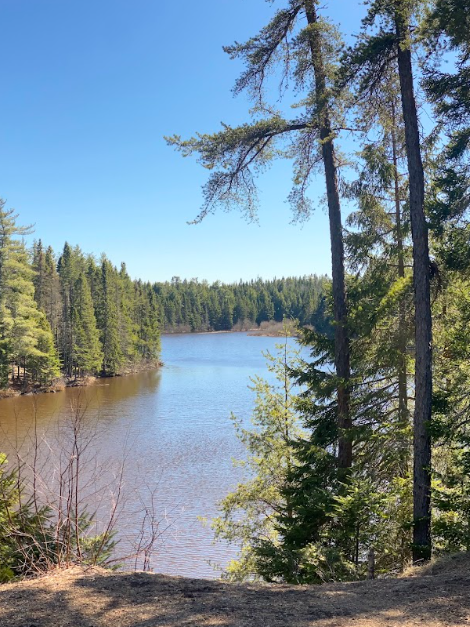
Driving through the darkness, with only the faintest signs of dawn beginning to emerge, I felt a familiar mix of exhaustion and excitement. By the time I pulled into the parking lot at Mill Creek Nature Park in Riverview, the stars had begun to disappear and the first light of morning was starting to break through the trees.
I pulled on my hiking boots, gathered my field gear, and waited for the University of New Brunswick (UNB) research team to arrive. The students unloaded their equipment with the ease of a well-practised crew. Mill Creek was one of several sites they had visited throughout the summer, and it showed. They knew exactly what needed to be done, and we wasted little time getting started.
We headed toward the easternmost section of the park, where an expanded trail had been developed the previous summer. After finding a suitable clearing, we began setting up a mist net.
So, what exactly is a mist net?
A mist net is a long, fine-mesh net suspended between two poles. Its mesh is designed to be difficult for birds to see, allowing birds flying through the area to be gently caught in its loose pockets. When a bird is captured, trained banders carefully remove it from the net for examination and processing before releasing it.
Once the net was in place, we moved away from the immediate area to minimize disturbance and allow birds to continue their normal activities. Patience is a virtue in this line of work. We waited, checking the net approximately every ten minutes to ensure any captured birds could be safely removed without delay.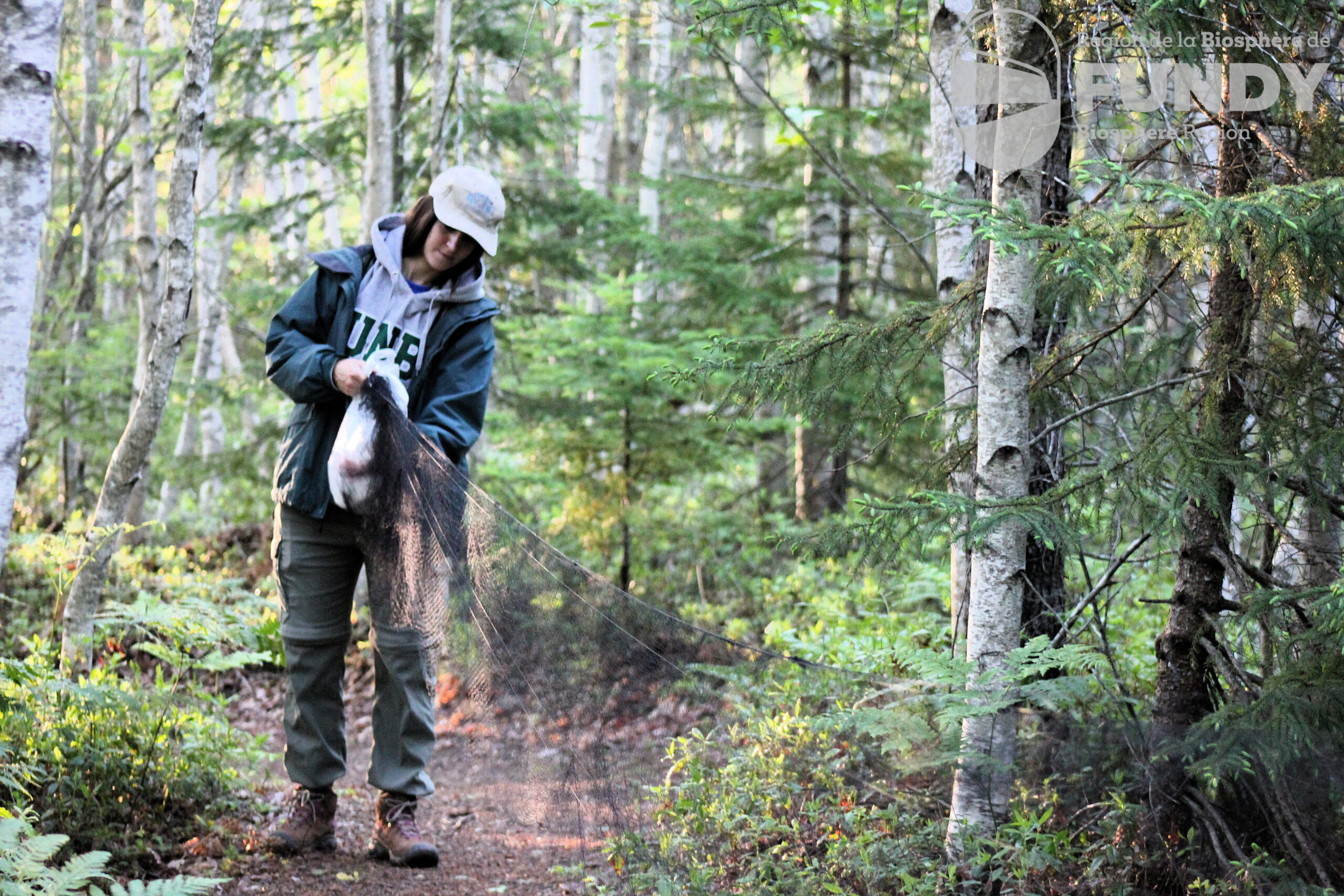
Meanwhile, the UNB project lead headed along a different route to conduct point counts at several locations throughout the park. Unlike mist netting, point counts involve standing at a fixed location and recording birds that are seen or heard within a designated period. Together, these two methods provide complementary information about the bird community, helping researchers document species occurrence and better understand the variety of birds using an area.
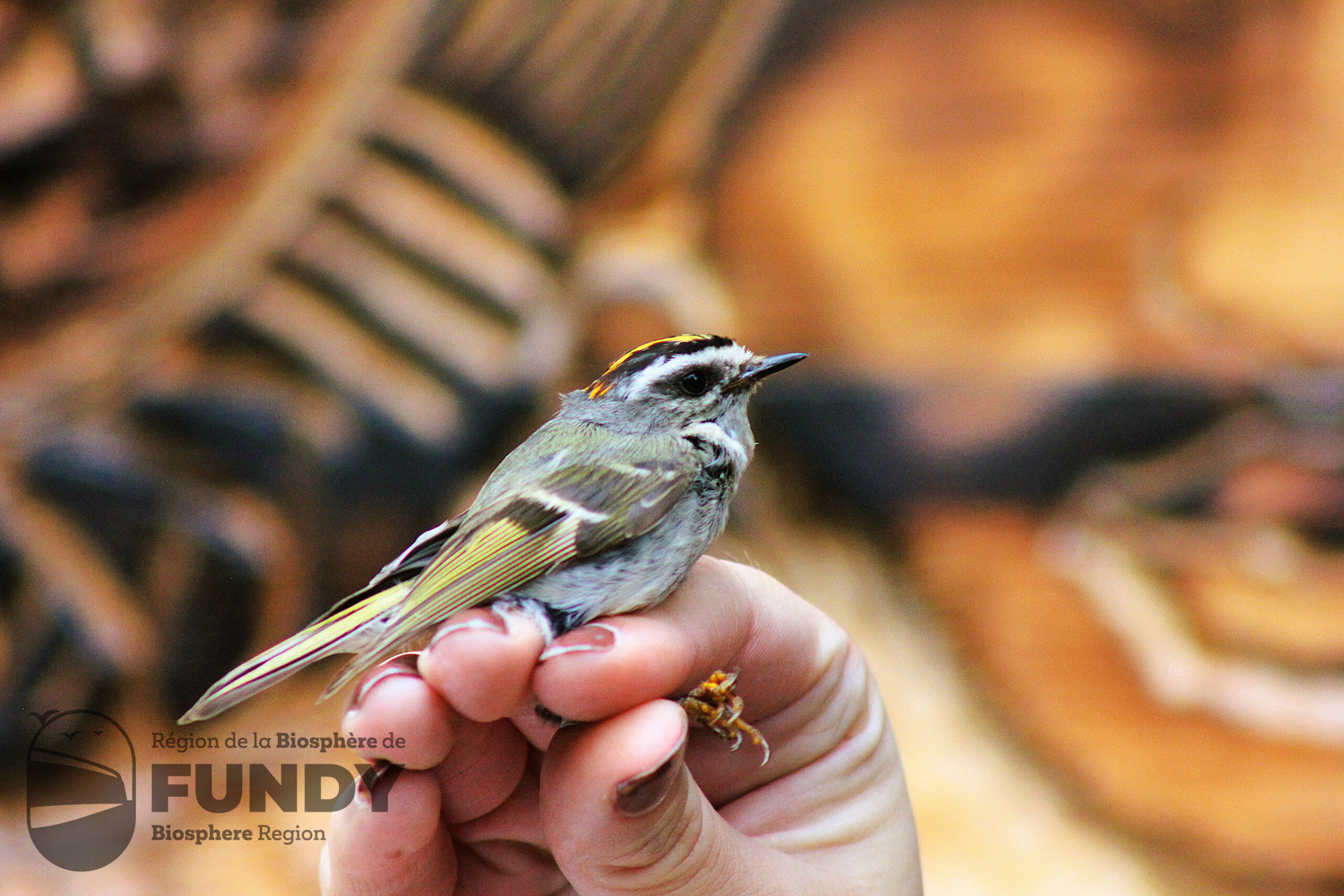
After nearly two hours of waiting, we finally had our first capture: a Golden-crowned Kinglet!
There is something special about seeing a bird up close that you might otherwise only catch a fleeting glimpse of in the forest canopy. Once carefully removed from the net, the bird was placed in a small, dark cloth bag to help keep it calm while we prepared to process it.
Each bird goes through a series of careful measurements and observations. We recorded its weight, examined its plumage to help determine its age, assessed its sex where possible, and measured its wing length. Finally, it received a small, lightweight metal leg band stamped with a unique identification number. Different band sizes are used depending on the species and size of the bird, ensuring the band is appropriately fitted.
These bands are part of a larger bird-monitoring network. If a banded bird is recaptured or its band is reported elsewhere, researchers can use that information to learn more about its movements, distribution, and survival over time. Once processing is complete, the bird is released to continue on its way.
It is a remarkable amount of information to gather from such a small animal!
What did we find at Mill Creek?
While the early morning fieldwork was an experience in itself, the real value of monitoring comes from what we learn over time.
During the 2025 and 2026 monitoring seasons, a total of 38 bird species were documented at Mill Creek Nature Park, representing 168 detections across 18 point counts. An additional 15 individual birds representing nine species were captured and banded.
Some of the most frequently detected species included Ovenbird, Black-capped Chickadee, American Goldfinch, Red-breasted Nuthatch, and Red-eyed Vireo. Together, these observations provide a preliminary picture of the bird community using the park, including a variety of forest-associated and edge-associated species.
But how does Mill Creek compare with other natural areas in New Brunswick?
 To provide some additional context, bird diversity metrics from Mill Creek were compared with 17 other monitoring sites across the province.
One particularly interesting finding was that Mill Creek tied with Black River Protected Natural Area for the highest species evenness score (0.924) among the 18 sites compared. Species evenness describes how evenly individuals are distributed across the different species recorded at a site. In simpler terms, it tells us whether observations are relatively balanced across many species or dominated by just a few.
Mill Creek also recorded a Hill’s diversity value of 28.821 effective species, placing it approximately in the middle of the sites compared.
These findings are encouraging. They demonstrate that Mill Creek supports a relatively diverse and balanced bird community, with biodiversity values comparable to those documented at several other conservation areas in the province.
It is important to recognize that this monitoring was not designed to measure the direct effects of trail development or recreational use on birds. Rather, it provides an initial baseline that can help inform future monitoring and conservation decisions.
Why do municipal conservation areas matter?
Mill Creek Nature Park is a great example of why biodiversity conservation needs to happen at every scale.
When we think about protected areas, we often picture expansive national parks, remote wilderness, or large provincial protected natural areas. But some of our most important opportunities for conservation are much closer to home.
Municipal natural areas provide habitat for wildlife, maintain ecological connections across developed landscapes, and give communities opportunities to experience and connect with nature. They can also contribute to broader conservation objectives by maintaining habitat and natural features within increasingly developed areas.
This is where Other Effective Area-Based Conservation Measures (OECMs) come in.
OECMs are geographically defined areas that are not necessarily established as formal protected areas but are managed in ways that achieve positive, long-term outcomes for biodiversity conservation. They recognize that meaningful conservation can happen through a variety of land management approaches, including municipal parks and other community-managed natural areas.
Mill Creek Nature Park became New Brunswick’s first municipally recognized OECM, demonstrating how local governments can contribute to Canada’s broader biodiversity conservation commitments.
Importantly, OECM recognition is not about placing blanket restrictions on how communities use their natural areas. It is about recognizing places where biodiversity conservation is already being achieved through existing management practices and supporting the continuation of those outcomes over time.
The bird monitoring at Mill Creek helps illustrate why this matters. By documenting the species using the park and establishing a preliminary understanding of its biodiversity, we have a stronger foundation for making informed management decisions as the park continues to develop.
A special thank you to the Town of Riverview
An important part of this work would not have been possible without the support and commitment of the Town of Riverview.
The Town directly supported the bird monitoring initiative, including funding a student position that helped make this fieldwork possible. This investment in local conservation research demonstrates the value of municipalities supporting opportunities to better understand and manage the natural areas within their communities.
Riverview has also demonstrated exceptional leadership as the first municipality in New Brunswick to have its own OECM. Its commitment to the long-term, sustainable management of municipal green spaces is an important example for other communities looking to integrate biodiversity conservation into their land management practices.
The biodiversity findings at Mill Creek are something worth celebrating. They reflect not only the ecological value of the park itself, but also the importance of thoughtful, adaptive management and the people responsible for putting those practices into action. We extend our sincere thanks to the Town’s staff and land managers for their ongoing commitment to maintaining a natural area where biodiversity conservation and public enjoyment can coexist.
Looking ahead
The 2025–2026 monitoring is an important starting point, but there is still more to learn. Continued monitoring using consistent survey methods could help us better understand how the bird community changes over time and whether different levels of trail use or future trail development influence bird occurrence and distribution.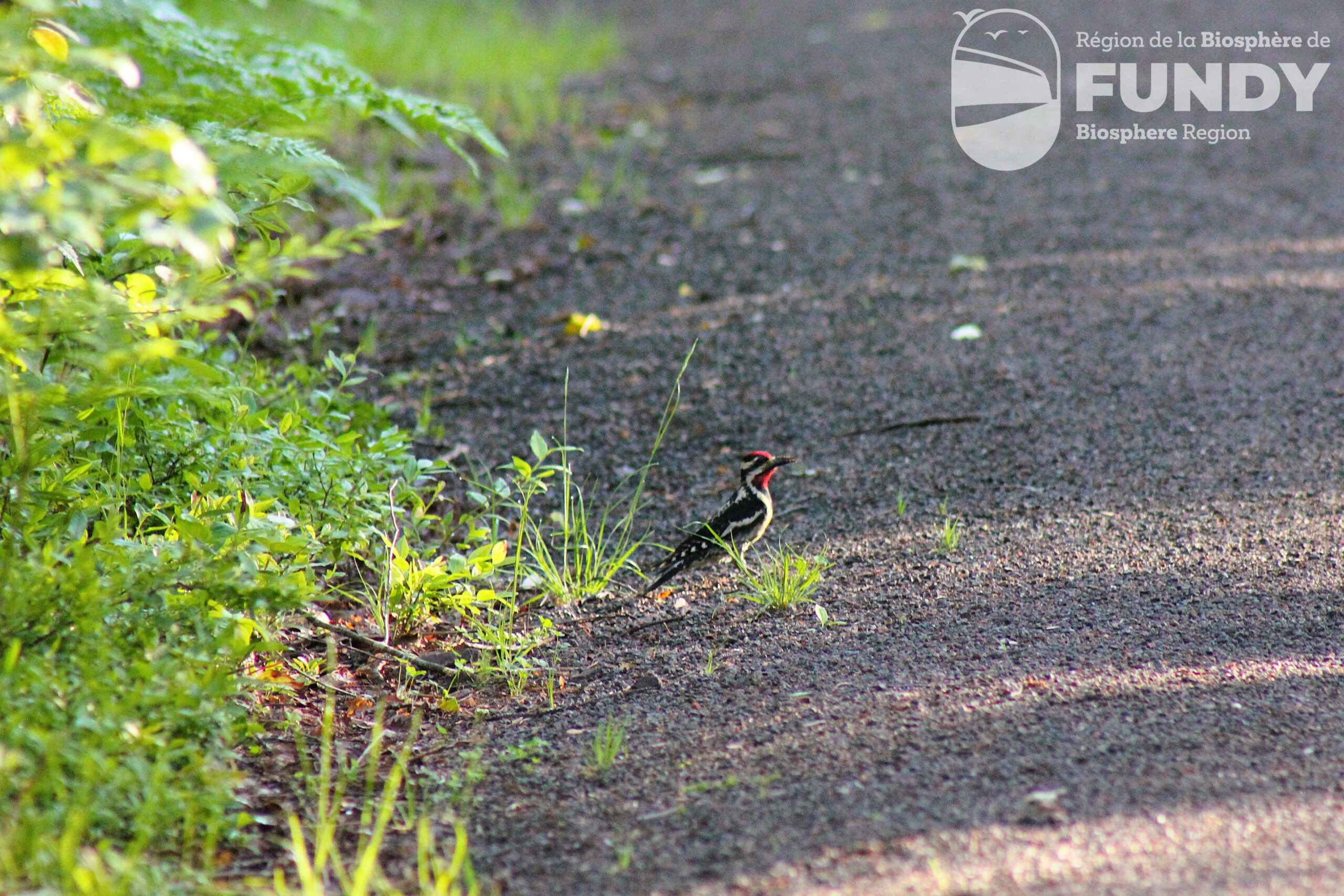
For the Town of Riverview, this information provides another tool to help balance recreational opportunities with the ecological values that make Mill Creek such a special place.
And for those of us working in conservation, it is a reminder that biodiversity is not something that exists only in faraway wilderness. Sometimes, it is right outside our door, quietly carrying on in the forest while the rest of the community is still asleep.
Sometimes, all it takes is a 3:00 a.m. start to appreciate just how much is happening before the park wakes up.